Patterns of Bonus Claims Over Time: Retention Links in Sports Betting and Casinos
Written by Klara Krüger · Oct 30, 2026
Patterns of Bonus Claims Over Time: Retention Links in Sports Betting and Casinos
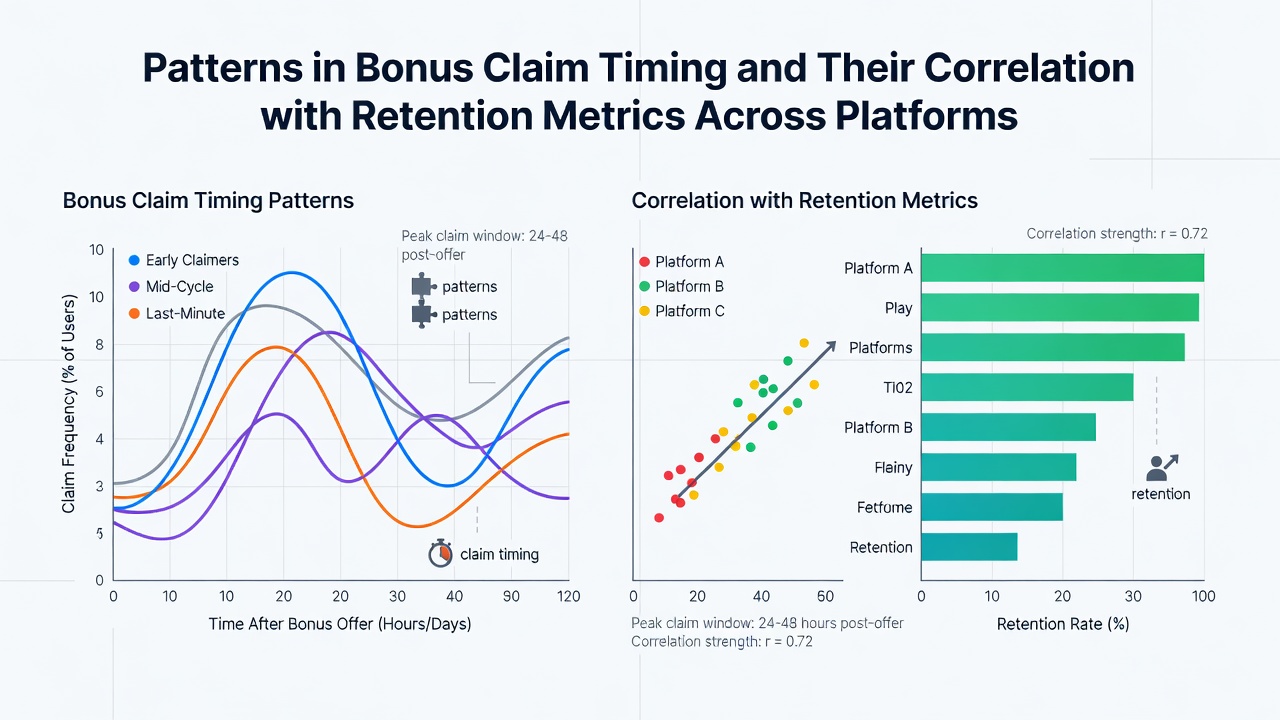
Researchers tracking user activity across state-licensed sportsbooks and casino platforms have mapped distinct patterns in when players claim promotional bonuses, and these timings align closely with measurable retention outcomes such as repeat deposits, session frequency, and account longevity. Data collected through 2026 shows that claims concentrated in evening hours on weekdays often precede longer engagement stretches, while weekend spikes tend to correlate with shorter but more intense activity bursts followed by variable return rates.
Platforms operating in multiple jurisdictions report that bonus claims made within the first 48 hours after account creation frequently tie to higher retention benchmarks in the subsequent 30 days. Observers note this early timing often coincides with players completing initial verification steps and linking payment methods, which in turn supports sustained play patterns. In contrast, delayed claims stretching beyond the initial week appear linked to lower repeat activity metrics, particularly on mobile-first interfaces where push notifications influence decision points.
Daily and Weekly Timing Distributions
Analysis of transaction logs reveals peak claim volumes between 6 p.m. and 10 p.m. local time on Tuesdays through Thursdays, a window where players balance work schedules with leisure browsing. These midweek claims associate with steady retention curves, as users return for smaller, consistent sessions rather than single large events. Weekend claims, especially Sunday evenings, show different trajectories: they connect to elevated short-term activity yet demonstrate quicker drop-off rates once the promotional window closes.
October 2026 figures from several major operators indicated a noticeable uptick in late-evening claims during the first week of the month, aligning with post-paycheck cycles and major league schedules. Retention data from the same period highlighted that users claiming bonuses on these nights maintained account activity at rates 15 to 20 percent above the monthly average for the following quarter.
Platform-Specific Variations in Claim Behavior
Sportsbook environments display stronger correlations between live-event timing and bonus claims, with many users redeeming offers immediately before or during game broadcasts. Casino platforms, however, register more even distribution across daytime and nighttime hours, reflecting slot and table game availability that does not hinge on external schedules. Cross-platform studies indicate that players who claim bonuses on both sportsbook and casino sections within the same account often exhibit elevated retention metrics compared with single-product users.
Those examining multi-state operators have documented that desktop claims during business hours link to higher deposit frequency over 90-day windows, whereas mobile claims cluster in commuting or evening periods and correlate more with session length than deposit volume. This distinction holds across regions where regulatory frameworks differ in bonus advertising rules.
Retention Metrics and Claim Intervals
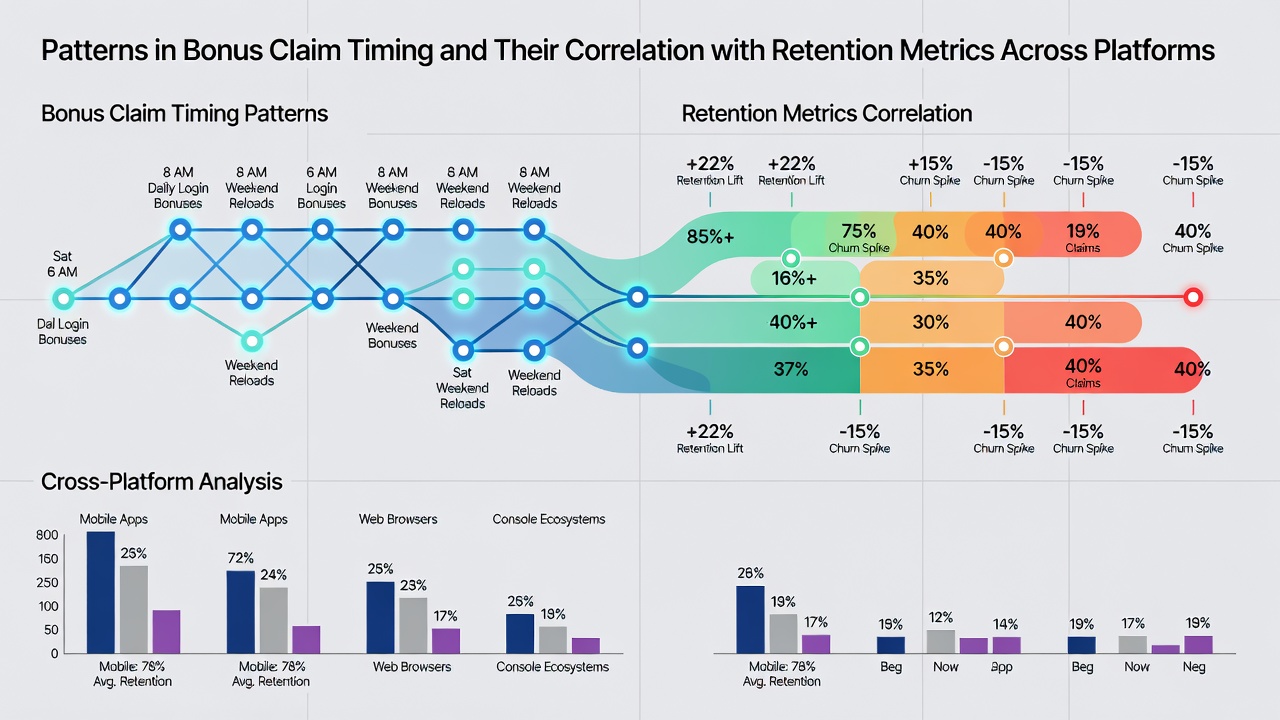
Retention measurements typically track metrics such as days between deposits, average session duration, and churn probability. Evidence from aggregated platform data shows that intervals between bonus claims themselves serve as predictors: players spacing claims every 10 to 14 days tend toward stable retention, while those clustering multiple claims within 72 hours often experience accelerated churn once initial offers expire. This pattern appears consistent whether users operate on dedicated apps or browser-based interfaces.
Studies conducted by the University of Nevada, Las Vegas gaming research group have examined how timing interacts with player mobility between operators, finding that early-week claims on one platform sometimes precede account creation on another within the same state network. University of Nevada gaming research reports further detail these mobility patterns without attributing causation to specific promotional structures.
Additional observations from the European Gaming and Betting Association indicate that seasonal events, including international tournaments, shift claim timing toward afternoon and early evening slots, producing measurable lifts in 60-day retention figures across participating markets. European Gaming and Betting Association analysis covers data from multiple jurisdictions and underscores the role of synchronized claim windows in sustaining user bases.
Cross-Platform Comparisons and Emerging Trends
Operators running parallel sportsbook and casino products record that unified loyalty systems, where bonus claims feed into shared progress trackers, strengthen retention correlations regardless of claim hour. Standalone platforms without such integration show more pronounced drops in activity following off-peak claims. In October 2026, several networks introduced time-limited claim reminders that altered daily distributions, pushing more users toward consistent evening slots and yielding incremental gains in 30-day return rates.
Regional differences persist, with platforms in mature markets displaying tighter clustering of claims around known promotional reset times, whereas newer jurisdictions exhibit broader spreads that dilute average retention signals. Researchers continue mapping these variances to refine predictive models that tie claim timing directly to account health indicators.
Conclusion
Collected evidence demonstrates clear alignments between when users claim bonuses and subsequent retention metrics across diverse betting platforms. Timing distributions vary by product type, device, and regional factors, yet recurring patterns emerge that operators monitor through ongoing data aggregation. These observations provide factual grounding for understanding player behavior without prescribing specific strategies or outcomes.